Water Features Built into Working Land
Pond Construction in Bunnlevel for properties requiring functional water features or acreage reshaping
3B Site Development handles pond construction by excavating, shaping, and grading the land to create a water feature that fits the property's existing terrain and intended use. Landowners across Bunnlevel and surrounding areas need pond work when they want to add livestock water sources, establish irrigation reserves, create recreational fishing spots, or reshape property drainage around a planned basin. The process involves moving significant amounts of earth, establishing proper depth and slope, and managing how water flows into and out of the finished feature.
Pond construction begins with site evaluation to determine excavation depth, basin shape, and where removed soil will be placed to form stable berms or graded transitions. The work requires clearing vegetation, stripping topsoil for later use, and operating excavators to dig the pond bowl while maintaining slopes that resist erosion and support the water level you need. In areas with sandy or clay-heavy soils common to this region, the excavation approach adjusts to soil stability and how well the ground will hold water once the basin fills.
Schedule a site consultation to review your property's terrain and discuss the proposed pond layout.
What Proper Pond Excavation Requires
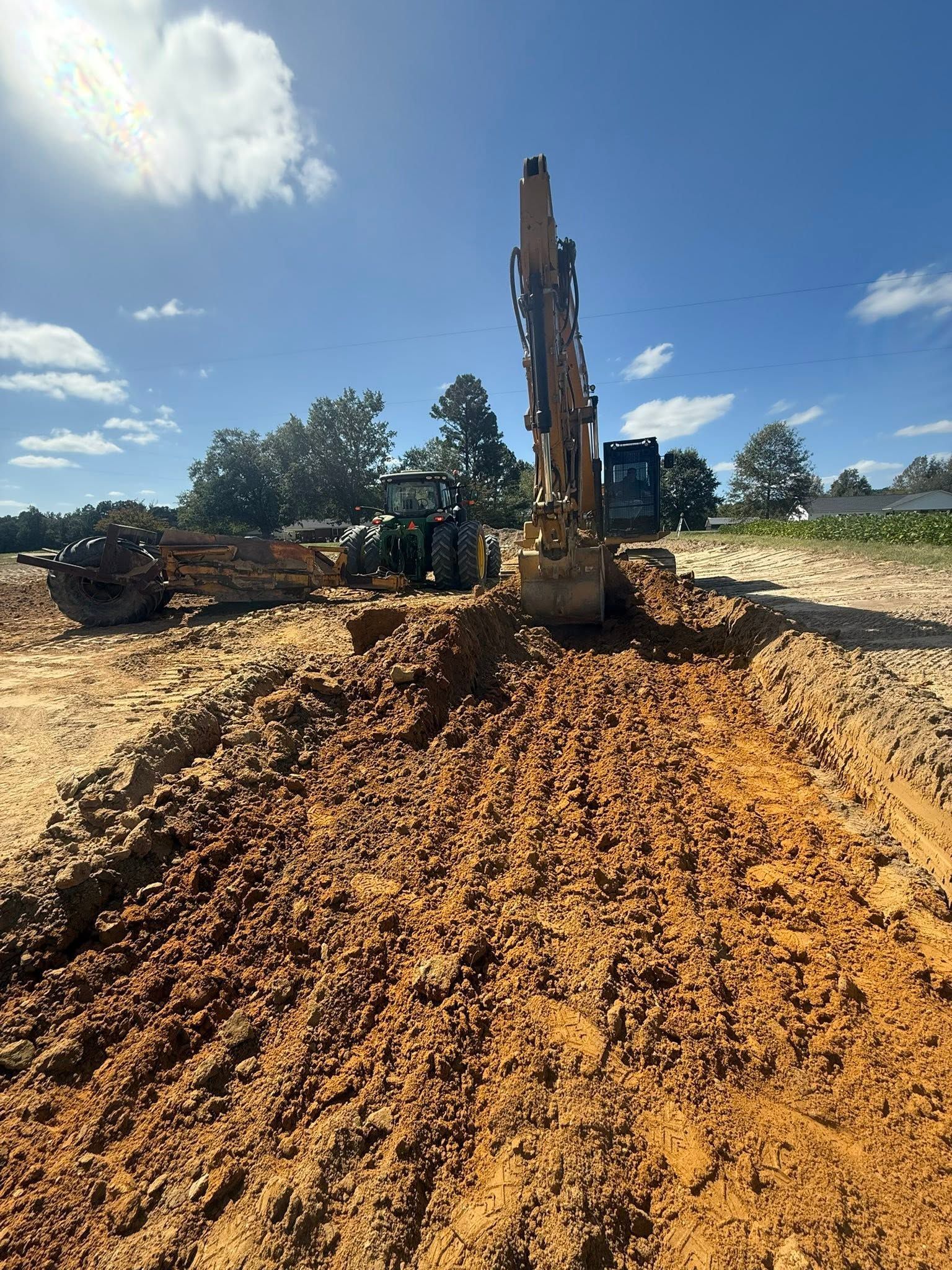
The excavation process removes soil in layers, creating a basin with sloped sides that prevent collapse and a bottom contour that supports the depth you need for the pond's purpose. Equipment operators grade the surrounding land to direct surface runoff toward or away from the pond depending on your water source plan, and excess soil gets redistributed to build up berms, fill low areas, or improve surrounding grades. Each load of earth moved changes the property's drainage pattern, so the shaping work accounts for how rain and runoff will interact with the finished feature.
Once excavation is complete, you'll see a basin with defined edges, sloped banks that resist erosion, and surrounding land graded to manage water flow as intended. The pond begins filling from groundwater seepage, surface runoff, or a planned water source, and the reshaped land around it supports access, vegetation establishment, or additional property improvements. The earthwork establishes the pond's capacity and long-term stability, determining how well it holds water and integrates with the rest of your acreage.
Pond construction often connects to broader land clearing and grading projects when you're improving multiple areas of a property at once. Some sites require tree removal and stump clearing before excavation begins, while others need additional shaping work to tie the pond into existing access routes or pasture areas. The scope depends on current site conditions, how much earthmoving is needed to reach the desired depth and shape, and what you plan to do with the land surrounding the water feature.
What Landowners Usually Ask
Questions about pond construction often focus on site requirements, excavation methods, and how the work fits into larger property plans.
What determines how deep the pond can be excavated?
Depth depends on the water table level, soil composition, and whether you need the pond for livestock watering, irrigation storage, or recreational use, with deeper basins requiring more excavation and careful slope management to prevent bank failure.
How is the excavated soil used after it's removed from the pond basin?
Removed earth typically gets spread to build berms around the pond perimeter, fill low spots elsewhere on the property, or grade surrounding land to improve drainage and access, with placement determined by soil quality and site layout.
When should pond construction happen relative to other land clearing work?
Pond excavation often occurs after initial clearing and grading if the site requires tree removal or brush clearing, allowing equipment to move freely and preventing debris from falling into the excavation area during the digging process.
What site conditions in Bunnlevel affect pond construction?
Sandy soils common in the area may require compaction or clay addition to reduce seepage, while properties with higher clay content naturally hold water better but need careful grading to manage how surface runoff enters the basin without eroding banks.
How does the surrounding land get shaped after the pond is excavated?
Grading work establishes gentle transitions from the pond edge to surrounding terrain, creates access paths for maintenance or livestock, and directs surface water flow to prevent erosion or uncontrolled runoff from washing soil back into the pond.
3B Site Development works with landowners to plan pond projects that fit the property's terrain, intended use, and long-term management needs. Request an estimate to discuss your site conditions and the excavation approach for your planned water feature.