Access Routes That Handle Daily Use
Driveways and Roads in Bunnlevel for properties requiring dependable access across residential and rural land
Loose gravel that shifts under tires, ruts that deepen after every rain, and access routes that become impassable during wet weather all point to inadequate site preparation before the driving surface was installed. 3B Site Development constructs driveways and roads by clearing the route, excavating to proper depth, establishing stable grades, and preparing base layers that support vehicle traffic without settling or washing out. Property owners across Bunnlevel need this work when building new access to home sites, connecting rural land to existing roads, or replacing routes that have deteriorated beyond simple maintenance.
The construction process begins with clearing vegetation and obstacles from the planned route, then excavating to remove unsuitable soil and reach a stable base depth. Grading equipment establishes the road's elevation and cross-slope to shed water toward drainage areas rather than letting it pool on the driving surface, which matters particularly on properties where clay soils hold moisture and create soft spots that ruts develop around.
Request a detailed estimate based on your property's terrain and the access route you need.
How Road Construction Addresses Long-Term Stability
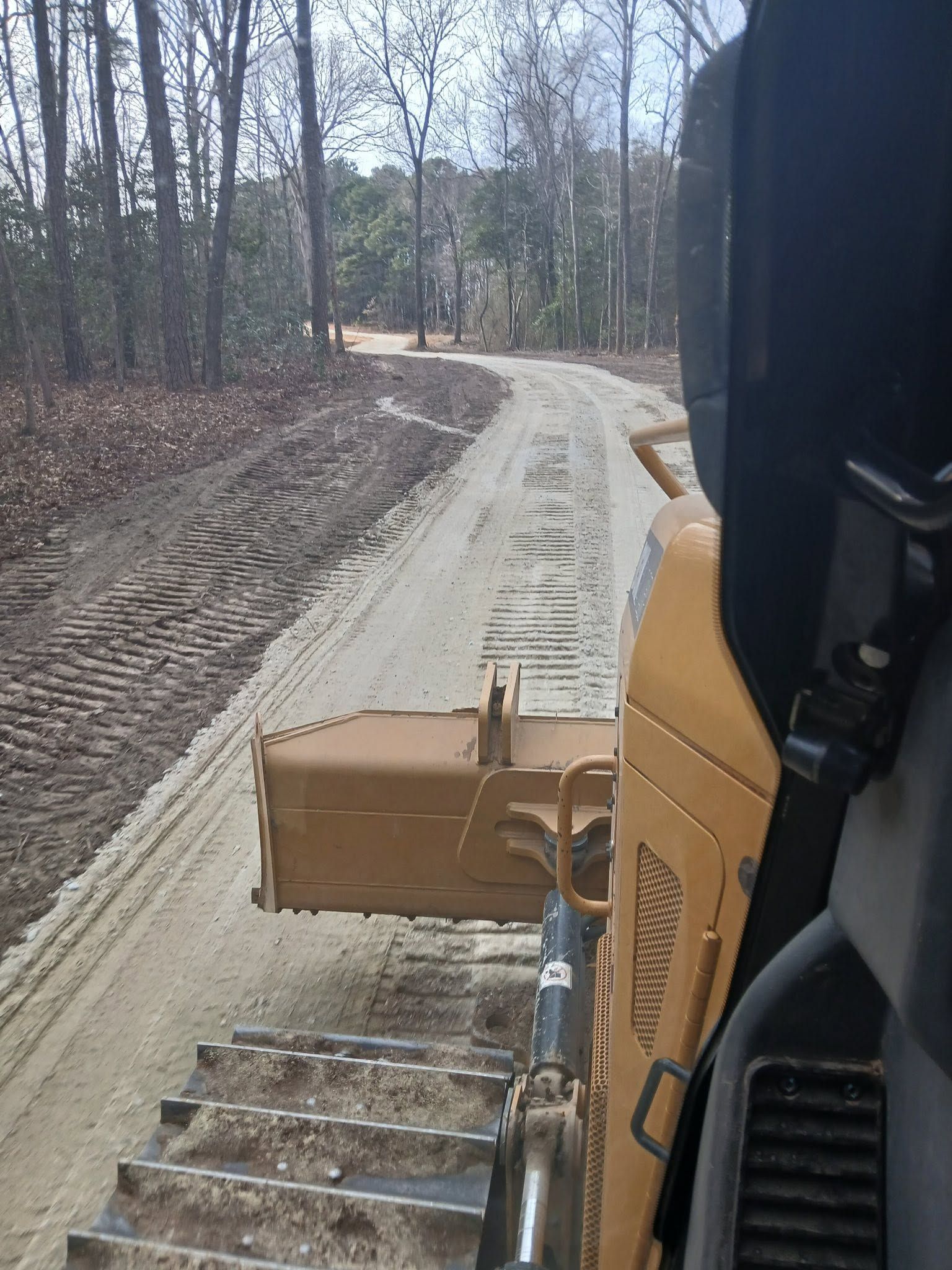
Proper base preparation involves compacting layers of stone or gravel to create a stable foundation that distributes vehicle weight and resists displacement under repeated traffic. The construction crew grades the route to maintain consistent drainage flow, cutting into high areas and filling low spots to avoid water accumulation that weakens the base over time. On longer routes or those crossing varied terrain, the grading work accounts for natural drainage patterns and adjusts the road's profile to prevent water from cutting across the surface and eroding the base material.
After construction finishes, you'll notice a route with firm, even surfaces that don't shift under vehicle weight, defined edges that contain the driving area, and drainage patterns that move water away from the roadbed instead of letting it saturate the base. Vehicles travel without creating deep tire tracks, and the access route remains passable during rain events that would turn poorly prepared routes into mud channels. The prepared base prevents the settling and rutting that require frequent regrading or stone addition on routes built without adequate excavation and compaction.
Driveway and road projects often tie into broader property improvement work when you're developing land, adding outbuildings, or establishing access to areas previously reached only by crossing open ground. The construction scope includes clearing trees and brush from the route corridor, managing drainage where the road intersects existing water flow, and connecting new access to public roads or existing driveways. Some projects require only the base preparation if you plan to add paving later, while others finish with compacted gravel as the final driving surface depending on traffic needs and budget.

Answers to Frequent Service Questions
Property owners typically ask about the construction process, base requirements, and how site conditions affect the finished access route.
What determines how deep the roadbed needs to be excavated?
Excavation depth depends on existing soil stability, expected traffic weight, and drainage requirements, with routes crossing soft or clay-heavy ground requiring deeper excavation to remove unsuitable material and allow for thicker compacted base layers.
How does proper grading prevent the road from washing out?
Cross-slope grading directs water off the driving surface toward ditches or drainage areas before it accumulates enough volume to erode the base, while longitudinal grading prevents water from running down the road length and cutting channels that undermine the roadbed.
When should drainage work happen during road construction?
Drainage features like culverts or ditches get installed after initial clearing and excavation but before base material is placed, allowing water management structures to integrate with the roadbed rather than being added later as fixes for flooding or erosion problems.
What base materials work best for driveways in Bunnlevel?
Crushed stone with angular edges compacts tighter and resists shifting better than rounded gravel, providing a stable foundation that handles the mix of passenger vehicles and heavier trucks common on rural properties in this area.
How does the surrounding land get shaped during road construction?
Grading work establishes gentle slopes from the road edges to adjacent ground, preventing abrupt drop-offs and allowing water to sheet off the driving surface without eroding the roadbed or creating ditches that require separate maintenance.
3B Site Development plans access routes around your property's existing terrain, drainage patterns, and how the road will be used once construction is complete. Arrange an on-site consultation to review the proposed route and discuss site preparation requirements for dependable access.