Shape the Ground Before Anything Gets Built
Grading and Site Preparation in Bunnlevel for Properties Requiring Usable Elevations, House Pads, and Stormwater Management Before Construction
Raw land does not naturally provide the level building areas, drainage paths, or access routes required for construction projects. Grading by 3B Site Development shapes cleared or excavated sites into construction-ready ground with proper elevations, stable house pads, and controlled water flow across Bunnlevel, Fayetteville, Raleigh, Lillington, Sanford, Pinehurst, Lumberton, and Clinton. This work establishes the foundation for everything that follows, from building placement to long-term drainage performance.
The service addresses builders preparing residential lots for home construction, property owners developing acreage into usable parcels, and commercial projects where parking, building footprints, and stormwater infrastructure must meet specific engineered elevations. Grading moves soil to create level pads, slopes surfaces to direct water away from structures, and prepares subgrades that support foundations, driveways, and utilities. Poor grading leads to standing water, foundation settlement, and erosion, while proper grading prevents these problems by controlling how water moves across the property from the start.
Arrange a site review to evaluate existing topography, drainage challenges, and target elevations before grading begins.
What Changes After Grading Is Finished
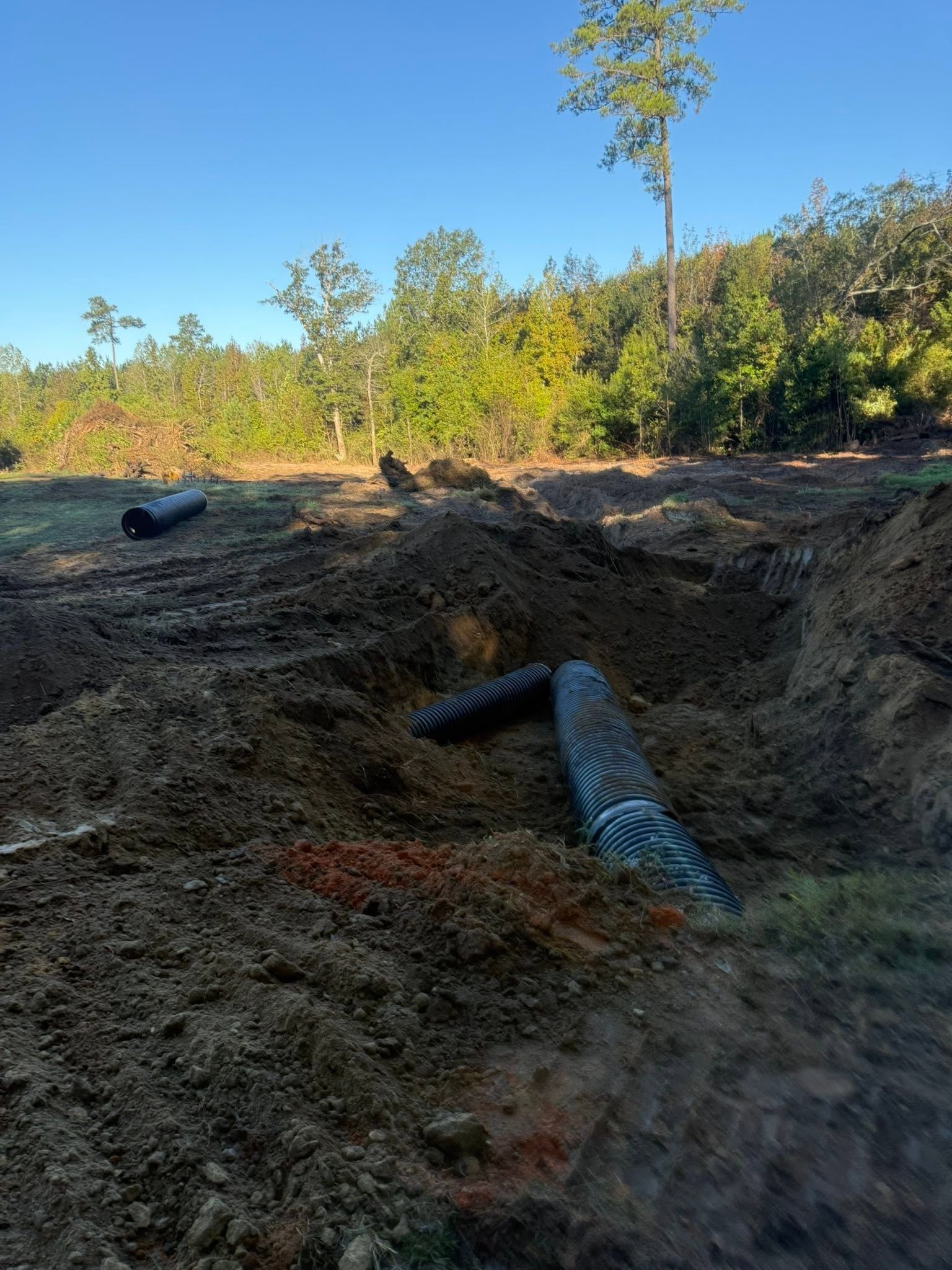
Grading involves cutting high areas, filling low areas, compacting subgrades, and establishing precise elevations using laser-guided or GPS-equipped equipment. House pads are built to support structural loads, with compacted fill layers and controlled slopes that shed water away from building zones. Stormwater management integrates swales, berms, and drainage paths that direct runoff toward retention areas or natural drainage courses without causing erosion or pooling near structures.
After grading, the property transitions from uneven, poorly drained ground to a site with defined building areas, predictable water flow, and stable surfaces ready for foundation work. Water no longer pools in low spots or flows toward planned structures, access routes are level and compact, and the elevations match the construction plans. The site looks organized rather than raw, and the ground is firm enough to support heavy equipment without rutting or settling.
Grading does not include clearing, utility trenching, or paving, though these often follow once the site is shaped correctly. Some projects require multiple grading passes as construction progresses, while others involve a single finish grade before building begins. Soil type, moisture content, and seasonal weather patterns in central North Carolina affect compaction requirements and project timing.
Answers to Frequent Site Preparation Questions
Grading decisions affect long-term drainage, foundation stability, and how well the finished property functions, so understanding the process helps property owners and builders plan correctly.
What is a house pad and why does it matter?
A house pad is a compacted, level area built to support a building foundation, preventing settlement and ensuring the structure sits at the correct elevation relative to surrounding drainage.
How does grading address stormwater management?
Grading establishes slopes that direct water away from buildings and toward designated drainage paths, swales, or retention areas, preventing pooling and erosion near structures.
When should grading happen relative to clearing and excavation?
Grading typically follows clearing and any necessary excavation, once the site is accessible and the ground surface is free of stumps, debris, and obstructions.
What equipment is used for precise grading work?
Dozers, motor graders, and excavators equipped with GPS or laser guidance systems allow operators to achieve exact elevations and slopes specified in site plans or engineering drawings.
How do soil conditions in the Bunnlevel area affect grading?
Sandy soils common in parts of central North Carolina drain well but may require additional compaction, while clay-heavy soils hold moisture longer and need careful timing to avoid working wet ground.
3B Site Development coordinates grading with clearing, excavation, and road construction to deliver a fully prepared building site. Schedule a site assessment and estimate based on your property conditions and construction plans.