Move Earth with Purpose for Construction and Drainage
Excavation in Bunnlevel for Projects Requiring Precision Earthmoving to Support Building Pads, Ponds, Roads, and Property Improvements
Construction, drainage, and access projects require removing and relocating soil with precision rather than simply digging holes. Excavation by 3B Site Development addresses site preparation, house pad construction, pond installation, road building, and drainage improvements across Bunnlevel, Fayetteville, Raleigh, Lillington, Sanford, Pinehurst, Lumberton, and Clinton. The work involves calculating cut and fill volumes, managing soil placement, and shaping the ground to match engineered plans or functional requirements that ensure the finished site performs as intended.
This service is needed when property elevations must change, when subsurface obstacles must be removed, or when new features require earthmoving to create functional space. Excavation supports foundation work by cutting building areas to the correct depth, creates drainage structures by shaping retention ponds or swales, and establishes access routes by grading roads or driveways. The difference between excavation and general dirt work is accuracy—each cut and fill location matters because the finished elevations affect drainage, structural stability, and long-term site performance.
Schedule a site assessment to review soil conditions, project elevations, and earthmoving requirements.
What You Notice Once Excavation Is Finished
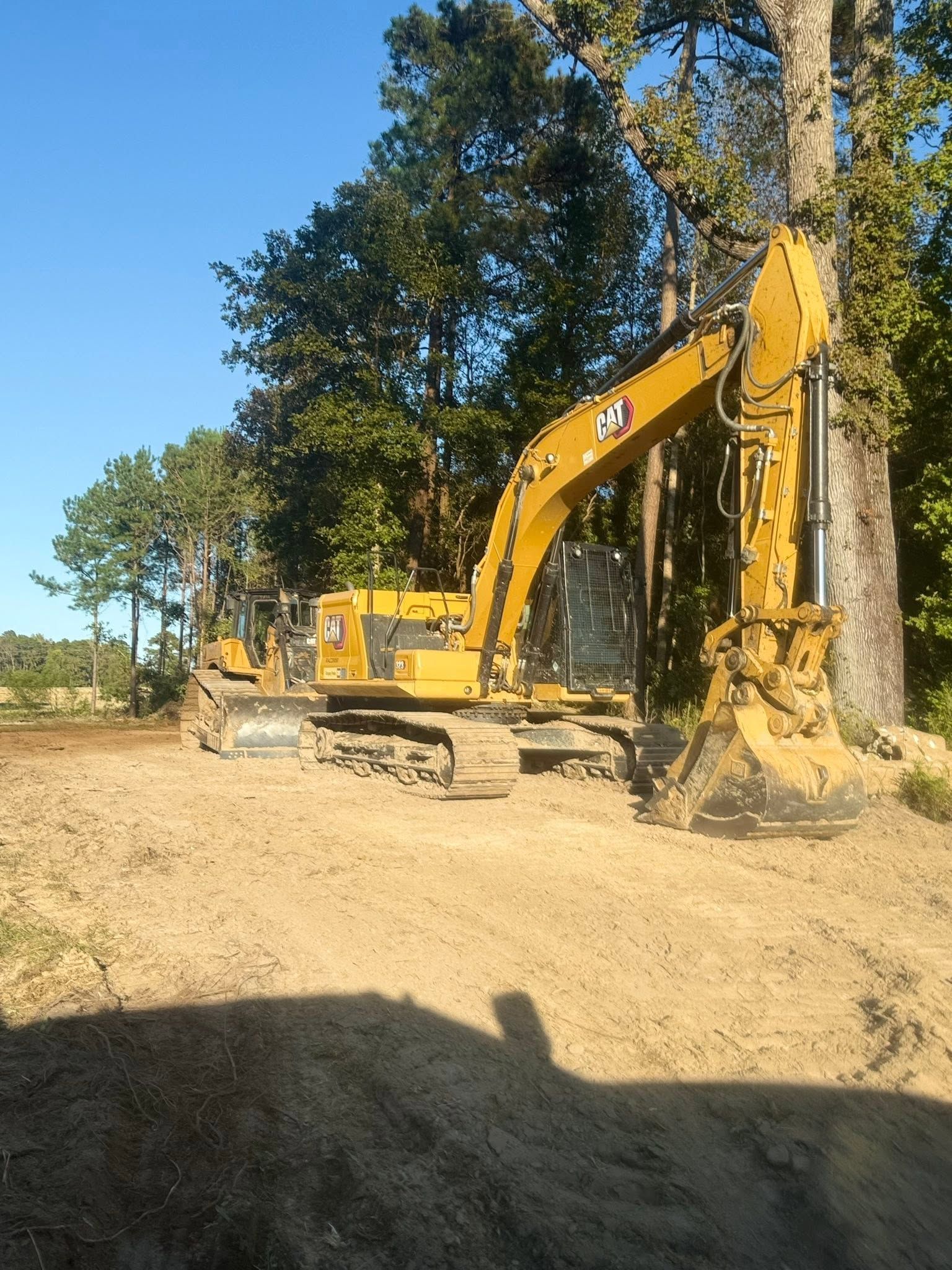
Excavation involves cutting soil from high areas, placing it in designated fill zones, compacting the fill to prevent settlement, and shaping the ground to match target elevations and slopes. GPS-guided equipment allows operators to achieve precise depths and grades, ensuring that house pads, ponds, and roads meet the specifications required for the next phase of construction or site development. 3B Site Development coordinates excavation with grading to create a unified approach to shaping the property correctly from the start.
After excavation, the property has defined building areas at the correct elevation, functional drainage features that direct water as planned, and access routes that support heavy equipment or vehicle traffic. The ground no longer looks raw or uneven—it reflects the intended design, with cut areas prepared for foundations or utilities and fill areas compacted to prevent settling. Water flows toward designated drainage paths instead of pooling randomly, and the site is ready for construction rather than requiring further earthmoving.
Excavation does not include clearing, utility installation, or finish grading around completed structures, though it often overlaps with these services during phased development. Soil type affects how material behaves during cutting, hauling, and compaction, and moisture content determines when excavation can proceed without creating mud or damaging equipment access routes. Some projects require importing fill or exporting excess soil depending on the balance between cut and fill volumes.
Questions Before Starting Your Project
Excavation projects vary by scope, soil conditions, and how the moved earth will be used, so understanding the process helps property owners and builders plan effectively.
What determines where soil is cut and where it is placed?
Excavation plans, grading designs, or engineered drawings specify cut and fill locations based on target elevations, drainage requirements, and the functional needs of the finished site.
How does excavation differ from grading?
Excavation involves larger-scale earthmoving to create significant elevation changes, while grading focuses on shaping and smoothing surfaces to final elevations—both services often work together on the same project.
What happens if soil must be imported or removed?
When cut and fill volumes do not balance, excess soil is hauled off-site or additional fill is brought in, with costs depending on haul distance and material availability.
How do soil conditions in the Bunnlevel area affect excavation?
Sandy soils excavate easily but may require stabilization in fill areas, while clay soils hold moisture longer and need careful timing to avoid working wet ground that delays compaction.
When should excavation happen relative to other site work?
Excavation typically follows clearing and precedes finish grading, allowing the site to be shaped before utilities, foundations, or paving work begins.
3B Site Development plans excavation work to integrate with clearing, grading, and road construction, ensuring each phase supports the finished site design. Request an estimate based on your project scope and site conditions.