Process Vegetation Debris During Large Clearing Projects
Horizontal Grinding in Bunnlevel for Sites Where Brush, Trees, and Woody Material Must Be Reduced to Manageable Form
Large-scale land clearing generates substantial piles of brush, limbs, tree trunks, and woody debris that cannot remain on-site and are impractical to haul in raw form. 3B Site Development uses horizontal grinding to reduce this material into chips or mulch, processing vegetation efficiently during clearing and site development projects across Bunnlevel, Fayetteville, Raleigh, Lillington, Sanford, Pinehurst, Lumberton, and Clinton. This approach keeps job sites cleaner, reduces hauling costs, and speeds the transition from clearing to grading or construction.
Grinding is useful when clearing projects produce more woody debris than can be burned or hauled economically, when staging areas are limited, or when processed material can be spread on-site for erosion control or landscaping. The equipment processes tree trunks, root balls, stumps, brush piles, and limbs into smaller, uniform material that occupies less space and decomposes faster. Property owners clearing multiple acres or developers preparing tracts for subdivision benefit from grinding because it eliminates the debris piles that otherwise delay site work and tie up usable ground.
Contact us to discuss project size, vegetation volume, and site access for grinding equipment.
What Horizontal Grinding Accomplishes on Cleared Sites
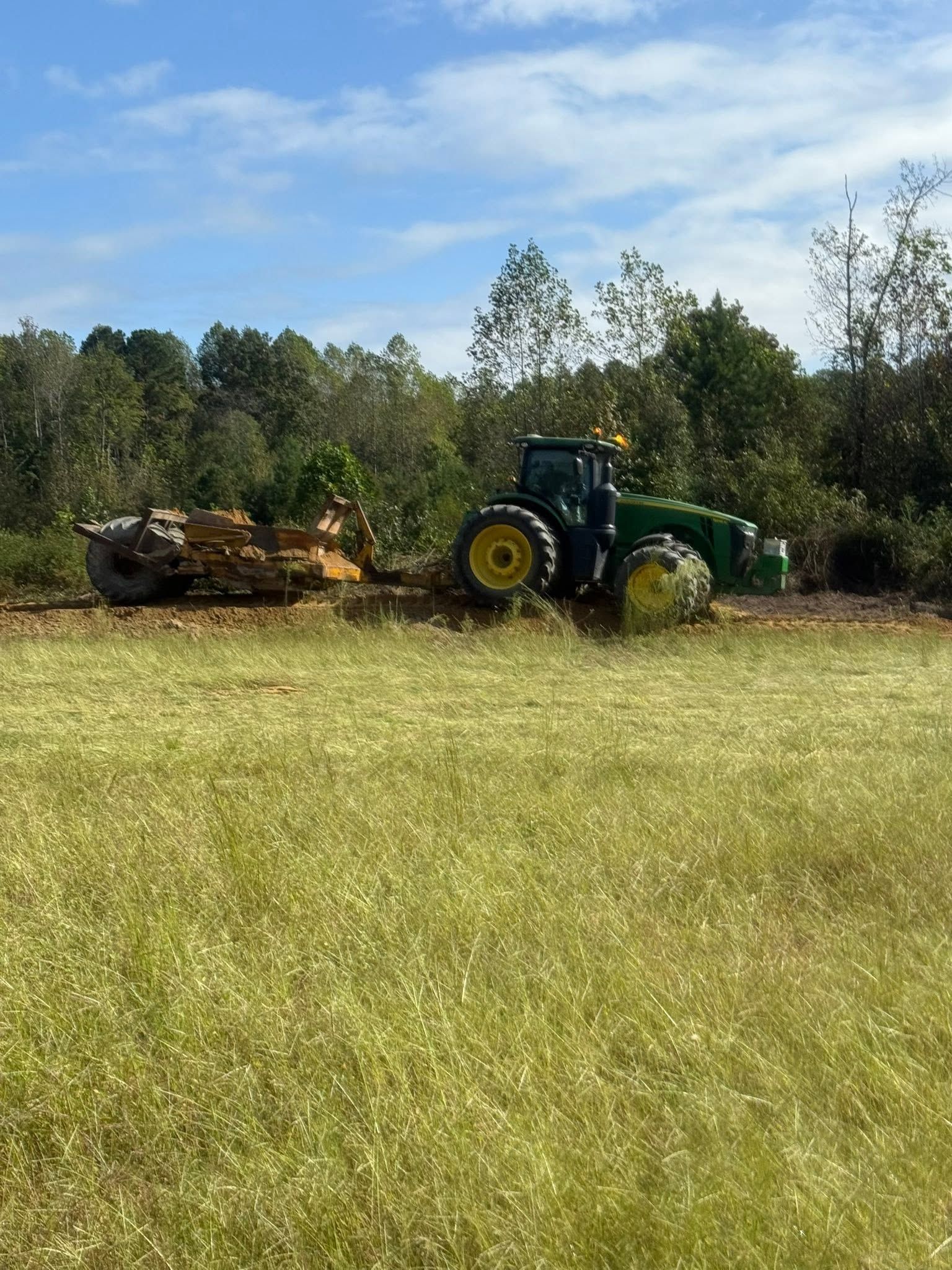
Grinding equipment processes woody material by feeding debris into a horizontal drum fitted with cutting teeth, reducing trunks, stumps, and brush into chips or shredded mulch in a single pass. The processed material is either hauled away, spread across disturbed areas to control erosion, or stockpiled for later use depending on project needs and material quality. Grinding happens after clearing is complete and debris is consolidated into processing areas accessible to heavy equipment.
Once grinding is finished, the site no longer has large debris piles blocking access or occupying areas needed for grading, excavation, or construction staging. The ground becomes usable again, equipment can move freely, and the volume of material requiring disposal is reduced significantly. You notice the property looks cleaner, the cleared areas are fully accessible, and the transition to the next phase of site work happens without delay.
Grinding does not include hauling processed material off-site unless specified, and it does not address clearing itself—only the debris generated during clearing. Some projects benefit from processing material into mulch that remains on-site, while others require complete removal of ground material. Site access, equipment clearance, and debris moisture content all affect grinding efficiency and project timing.
What Property Owners Usually Ask
Grinding projects depend on vegetation volume, material type, and what happens to the processed debris, so understanding the service helps property owners decide whether it fits their clearing plans.
What size debris can horizontal grinding equipment process?
Horizontal grinders handle tree trunks up to several feet in diameter, along with stumps, root balls, brush piles, and limbs, reducing all material to chips or shredded mulch in one operation.
How does grinding reduce hauling costs?
Ground material occupies far less volume than whole trees and stumps, meaning fewer truckloads are required if the processed debris must be removed from the site.
Can the processed material stay on the property?
Yes, ground mulch can be spread across disturbed areas for erosion control, used in landscaping, or left in designated stockpile areas if property size allows and project plans permit.
When does grinding make sense compared to hauling debris whole?
Grinding is practical when clearing produces large volumes of woody material, when haul distances are long, or when site access limits the number of truck trips that can be made efficiently.
What site access does grinding equipment require?
Grinders are large machines that need stable ground, adequate clearance, and sufficient space to maneuver, so site conditions in areas like Bunnlevel with sandy soils may require dry weather or temporary access improvements.
3B Site Development integrates grinding with clearing and site preparation work, processing debris as part of a coordinated approach to land development. Reach out to review vegetation volume and site conditions for your project.