Clear the Ground for What Comes Next
Land Clearing in Bunnlevel for Properties Transitioning from Wooded or Overgrown Conditions to Usable Building Sites
Wooded lots and overgrown parcels in central North Carolina require more than cutting down a few trees before construction equipment can operate safely. 3B Site Development handles land clearing across Bunnlevel, Fayetteville, Raleigh, Lillington, Sanford, Pinehurst, Lumberton, and Clinton, removing trees, brush, stumps, and unwanted vegetation while preparing the ground for grading, excavation, or construction. Once clearing is complete, the site becomes accessible to heavy equipment, drainage patterns become visible, and the actual topography can be evaluated for the work ahead.
This service addresses residential lots where a single home pad will be built, commercial tracts where parking and building footprints must be established, and larger acreage projects where roads, ponds, or multiple structures are planned. Clearing removes the surface obstacles that prevent accurate grading and creates the clean working surface required for excavation, utility installation, and stormwater planning. The root systems, surface debris, and standing timber that interfere with site shaping are eliminated during this phase, not left to complicate later work.
Schedule a site evaluation to review vegetation density, access points, and clearing boundaries before work begins.
What Proper Clearing Includes Beyond Tree Removal
Clearing involves felling trees, cutting brush to ground level, extracting stumps with root balls intact, and hauling debris off-site or processing it depending on project requirements and property access. Equipment selection depends on terrain, vegetation density, and whether the site will be graded immediately or cleared in phases. Heavy brush and saplings are removed along with mature timber to prevent regrowth from disrupting grading or foundation work.
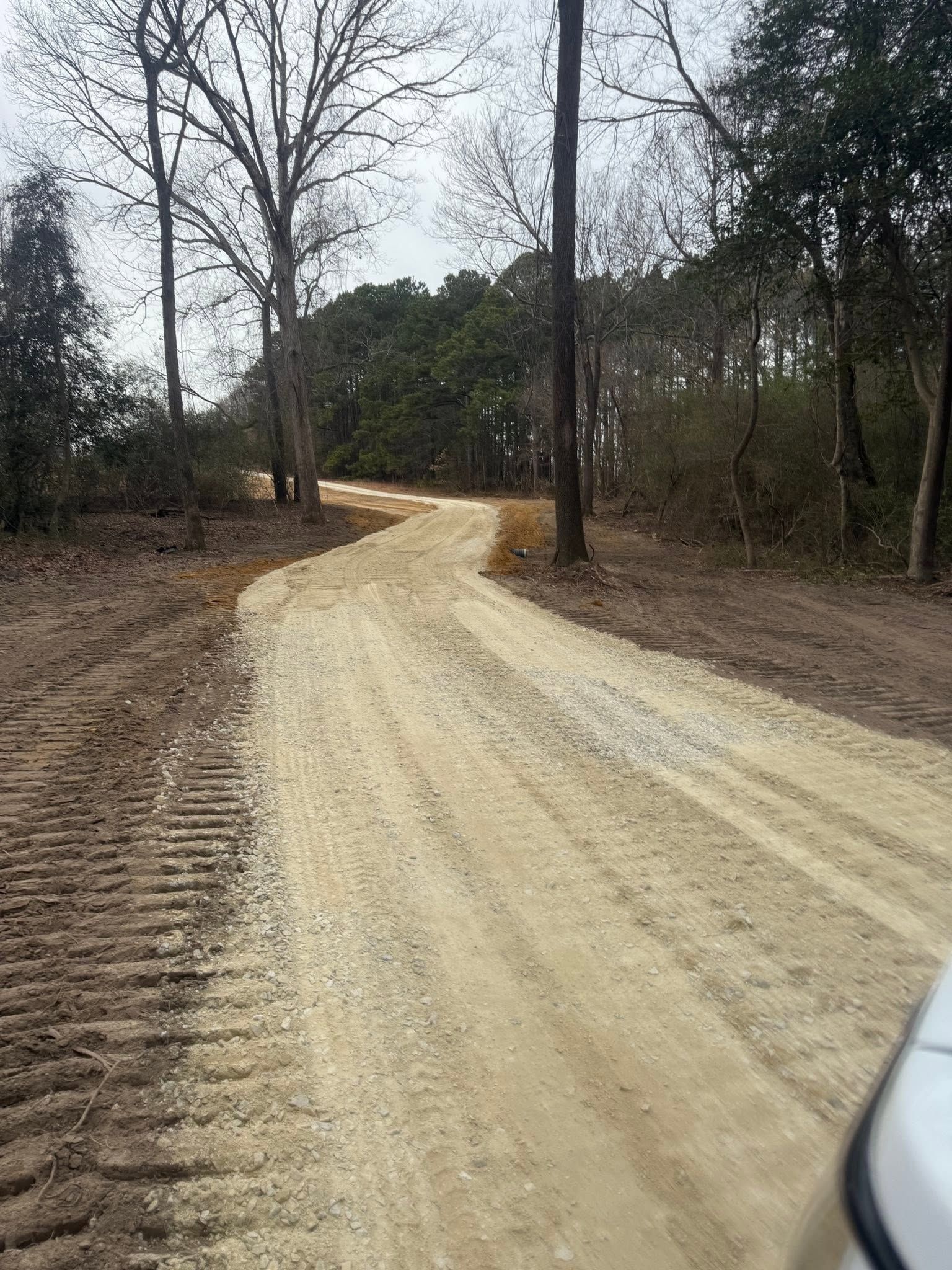
After clearing, the property transitions from a wooded or overgrown state to a workable surface where elevations can be measured, drainage flow can be observed, and construction zones can be staked. You see the actual ground contours, identify wet areas that need attention during grading, and confirm there are no surface obstructions that would interfere with equipment movement. The site becomes a blank working area rather than a vegetated lot that requires guessing about subsurface conditions.
Clearing does not include grading, fill placement, or stormwater structures, though these follow naturally once the land is accessible. The scope is determined by property lines, wetland boundaries if applicable, and the areas marked for development. Some projects require selective clearing to preserve specific trees or buffer zones, while others involve total vegetation removal across the entire parcel.
Questions Property Owners Ask About Clearing Projects
Clearing projects vary by acreage, vegetation type, and what follows next on the property, so understanding the process and planning helps avoid surprises during site development.
What happens to the trees and debris after clearing?
Depending on site access and project preferences, material is either hauled off-site, processed into mulch through horizontal grinding, or staged on a designated area of the property for later removal.
How does clearing prepare the site for grading?
Removing stumps and root balls eliminates obstructions that prevent smooth grading, and clearing exposes the actual ground surface so elevations can be measured and drainage can be planned accurately.
When should clearing happen relative to other site work?
Clearing typically occurs first, before any grading or excavation, so equipment can access the property and the natural topography can be assessed without vegetation interference.
What determines how long a clearing project takes?
Acreage, tree density, stump size, terrain slope, and whether debris is processed on-site or hauled away all affect the timeline, along with weather conditions common to the Bunnlevel area during wet seasons.
Can selective clearing preserve certain trees while removing others?
Yes, specific trees can be flagged for protection while surrounding vegetation is removed, though this requires clear marking and coordination before equipment begins work.
3B Site Development coordinates clearing with the grading, excavation, and road work that follows, ensuring each phase builds toward a construction-ready site. Request a clearing estimate based on your property boundaries and development plans.